Power BI and Microsoft Fabric

Trusted reporting that's built to grow, not rebuilt every time it does

Power BI is where most reporting starts, and for a lot of organisations, it's all they'll ever need. Some outgrow it: more sources, bigger volumes, governance that has to span the whole pipeline. Microsoft Fabric is where Power BI goes next. We build and implement both, starting with what your data needs rather than what's easiest to sell.

Book a consultation
Problem
CEO Image
CEOs/CTOs

Why does this matter and what strategic job does it do for me?

Most organisations start Power BI with the best intentions and end up with a sprawl of reports nobody fully owns. Dashboards get built department by department, each one connecting to its own export, its own definition of a metric, its own version of last month's numbers. It works, until someone in a meeting asks why two dashboards disagree and nobody can say for certain.

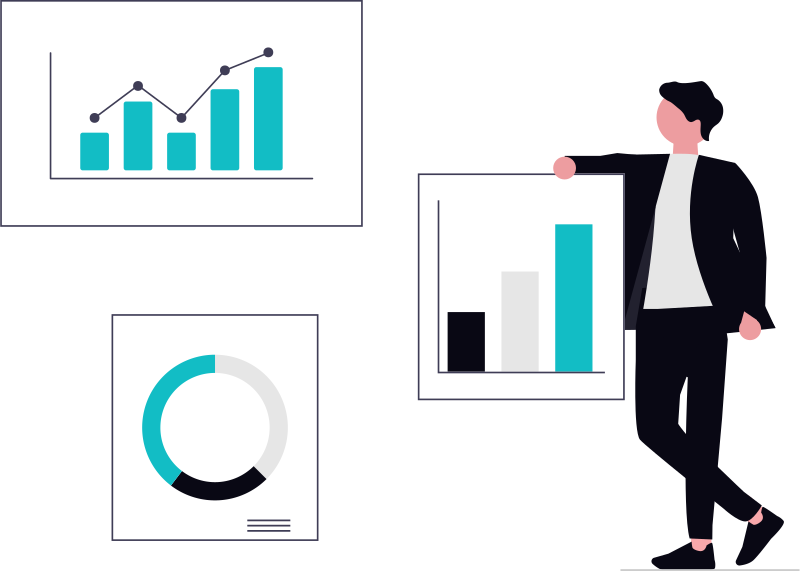
Solution

Reporting built on one governed foundation, not a dozen exports

We design and build Power BI reporting on a proper data foundation, so dashboards draw from one trusted source instead of a dozen disconnected exports. Where your data's outgrown what Power BI alone can manage, we implement Microsoft Fabric underneath it, so governance, storage and reporting sit in one place instead of stitched together after the fact.

Who is this for

Who is this for

Organisations already on Power BI, hitting its limits

You've got reports, maybe plenty of them, but they're built on disconnected sources, refresh slowly, or nobody's quite sure which version is the trusted one. The reporting layer's fine. What's underneath it isn't.

Organisations starting from spreadsheets and manual exports

Reporting today means someone pulling numbers together by hand, on a schedule, from memory of where everything lives. You want proper dashboards, built on data that's actually structured to support them, not a Power BI file bolted onto the same manual process.

The challenges we help organisations solve

Across both starting points, the challenges are consistent:

  • Dashboards built on disconnected exports, so different reports quietly disagree with each other.

  • Reporting that's grown organically, department by department, with no shared definition of core metrics.

  • Governance that stops at the data warehouse boundary, so security and access control get inconsistent once reports are published.

  • Growing data volumes or real-time requirements that standalone Power BI wasn't built to handle.

  • Manual refreshes and slow load times that undermine confidence in what the dashboard is actually showing.

  • No clear view of when it's worth moving from Power BI alone into the wider Fabric platform, or whether it's needed at all

What this covers

Power BI implementation

Dashboards and reports built on a proper semantic model, not a patchwork of imported files. Row-level security, clear metric definitions and a structure that scales as more teams start relying on it.

Data modelling and preparation

The unglamorous part that decides whether the dashboard on top can actually be trusted: clean, consistent, well-structured data feeding into the model, so the reporting layer isn't compensating for problems underneath it.

Microsoft Fabric implementation

Where data volume, governance needs or real-time requirements outgrow Power BI alone, we implement Fabric: OneLake as the unified storage layer. With data engineering, data warehousing and real-time analytics sitting alongside Power BI in one governed environment instead of several disconnected tools.

Governance and migration

For organisations already on Power BI Premium capacity, we manage the move to Fabric capacity cleanly, including the governance and access model that needs to travel with it. For everyone else, we help decide honestly whether Fabric is actually needed yet, or whether Power BI alone still has room to grow.

What sets The Curve apart

We're platform-agnostic, so we're not selling you Power BI and Fabric because it's the only stack we know. We recommend them when they're genuinely the right tool for the data and the organisation, and we're just as comfortable working outside the Microsoft ecosystem when that's what the problem actually calls for.

What we don't do is stop at the dashboard. Because we also handle the data engineering and warehousing underneath it, we can fix a broken source system rather than building a beautiful report on top of one. This is where a lot of Power BI projects quietly fall short.

A workshop-led engagement we ran replaced manual, spreadsheet-based reporting with dynamic Power BI dashboards and real-time insight, the kind of shift that only holds up if the data feeding it is solid.

Frequently Asked Questions

Let's build together

We're always eager to connect and explore how we can contribute to your journey. Reach out to us and let us know how we can assist you.

Call us Mon-Fri 9-4:30pm

+44 (0) 114 303 4070
Get in touch

We would like to contact you about our products and services. If you consent to us contacting you for this purpose, please tick below.

Review our Privacy Policy.