Time Saved Isn’t the Same as Money Made: What Leaders Told Us About AI ROI

October 14, 2026
6 mins read
Recent Posts
Ask a business leader if AI is saving their team time. The answer is usually yes. Ask what that time is worth to the business. That’s a much harder question.
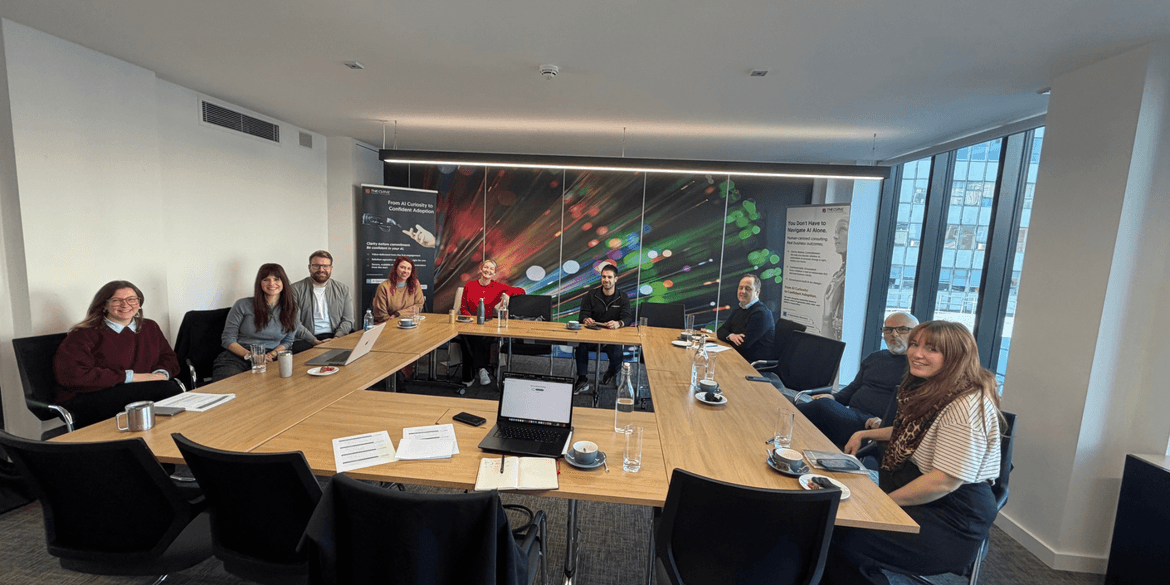
It came up at every one of our roundtables in Sheffield, Leeds and Manchester. So we gave it a room of its own. Senior leaders from manufacturing, education, legal, analytics and software joined The Curve for a candid discussion. We spent almost two hours on it.
There are two tempting answers. One says the return is obvious: count the hours saved. The other says you can’t measure it at all. Neither is right. The room gave us something more useful. It showed where measurement breaks down, and what the organisations getting it right do differently.
Everyone uses AI differently, so there’s no single way to measure it
This was the root of the problem. Everyone in the room was using AI, and they were using it in very different ways.
Some used it to clear admin. Others built it into the products their customers use. Others used it to read customer calls, or to streamline manufacturing operations. Each of those creates value in a different place. Each needs a different measure.
Time saved is the right number for an admin task. It says very little about a new product feature. Customer retention tells you something about service. It tells you nothing about invoice processing.
The same problem shows up inside a single organisation. Different teams run their own pilots, with their own tools and their own idea of success. So there’s no shared baseline, and no single view of what AI is worth to the business.
That’s why “what’s our return on AI?” is so hard to answer. It’s really lots of smaller questions, each with its own answer.
Most teams are measuring the wrong end of the process
There’s a second problem. Ask how AI is going and you’ll usually hear about time saved. Some teams had cut certain tasks by around half. Others pointed to faster reports or low token costs.
Those numbers are real. But they’re outputs. They show a task got quicker. They don’t show the business got better.
A board cares about outcomes: revenue, margin and keeping customers. To get there, you have to ask an awkward question. Where did the saved time go?
If it went into winning work, there’s a return. The same goes for keeping a client or avoiding a hire. If it vanished into the working week, there isn’t.
Outputs are easy to count. Outcomes mean following the time to see where it lands. Most teams haven’t done that yet.
The clearest evidence is a step change
The examples that convinced the room didn’t have the biggest percentages. They were the ones where something visibly changed.
One participant described producing a thousand documents in minutes. Others had automated invoices, data entry and job sheets. The token costs were tiny.
In manufacturing, teams digitised spreadsheets, ended duplicate data entry and automated labels. That cut errors and rework. It also kept data more secure.
In education, AI shrank curriculum and assessment work that used to take months. Teachers still checked the quality.
Customer service gave one of the most telling examples. Sentiment analysis and call summaries turned anecdote into evidence. Leaders could see when a client was unhappy, in time to act.
What made these persuasive was a step change. A contractor who didn’t need hiring. A client who didn’t leave. A role that moved to more valuable work. That’s when time saved becomes a number a finance director recognises.
The return can dip before it rises
Discovery takes effort. New processes need watching until they’re stable. For a while, you pay for the old way and the new one. That dip is normal. Expect it, and know what you’re waiting for.
So the leaders split their investments in two. Quick wins automate high-volume, low-risk tasks. They should pay back fast. Strategic bets build AI into a product or the customer experience. They need different measures and more time. Judge both the same way and one will look like a failure.
People decide whether it sticks
The discussion kept coming back to people.
Automation worked best when staff helped choose what to automate. Frontline teams know which tasks are dull and repetitive. Good leaders asked them. They built small prototypes and showed visible wins. That earned more trust than any announcement could. They also kept people in customer-facing roles, where they matter most.
Morale improved too. Staff said they were happier once the dull work went. The work that remained was more engaging and more visible.
There were warnings as well. Cut headcount before the benefits arrive and you’ll leave gaps and hurt morale. Ignore the people who drive an improvement and resentment follows. Reskilling and sharing the gains aren’t extras. They’re part of the business case.
Governance starts where people already are
The room’s advice: don’t start with policy. Start with how people already use AI. Learn what controls those uses need. Then turn them into rules for everyone.
This pays off commercially too. Good governance makes a business more resilient. It also gives buyers and investors more confidence, and that can support exit value.
Two other tensions came up. The first was suppliers. If a supplier builds your automation and keeps the savings, your interests drift apart. Some leaders were looking at outcome-based pricing or shared savings instead.
The second was funding. Grants and training are available, but they often lack a plan. The result is scattered pilots, and different teams buying the same tools.
Pick the model to fit the job
The technology choice affects the return too. The big frontier models are powerful. They’re also expensive, and they create dependency. Smaller, specialised models can run on your own servers. For a specific task, they tend to be more stable. Large models also need a lot of compute and power. That’s one reason some firms are looking at local models.
There are hidden costs too. Answers that sound right but aren’t. Hours lost tinkering with prompts. Rework every time a provider changes its models.
The better approach treats an AI agent like a new team member. Brief it properly. Give it a memory of how your organisation works. Then the value builds over time, instead of starting from scratch with every prompt.
So how do you measure it?
No single number captures the return on AI. The room settled on four layers, tracked over time.
Process: Time saved, errors reduced, rework avoided.
Product: The value AI adds to what your customers use.
People: Engagement and retention.
Commercial: Revenue, and costs avoided, like a contractor you didn’t need.
Measure each process, each project and the whole business. Start with pilots that make a visible difference. Scale once you know what you’re measuring.
The question isn’t whether AI saves time It does.
The question is whether anyone follows that time to see where it goes.
The room was clear about who’ll pull ahead. It’s the organisations that decide quickly and run disciplined pilots. They measure what changed, and only then scale. That’s how a time saving becomes a return.
If you need to turn AI activity into evidence your board will accept, start with our AI Discovery. It maps where AI is already in use and where the real opportunities sit. It also sets out how you’ll measure what changes.